M-Talk
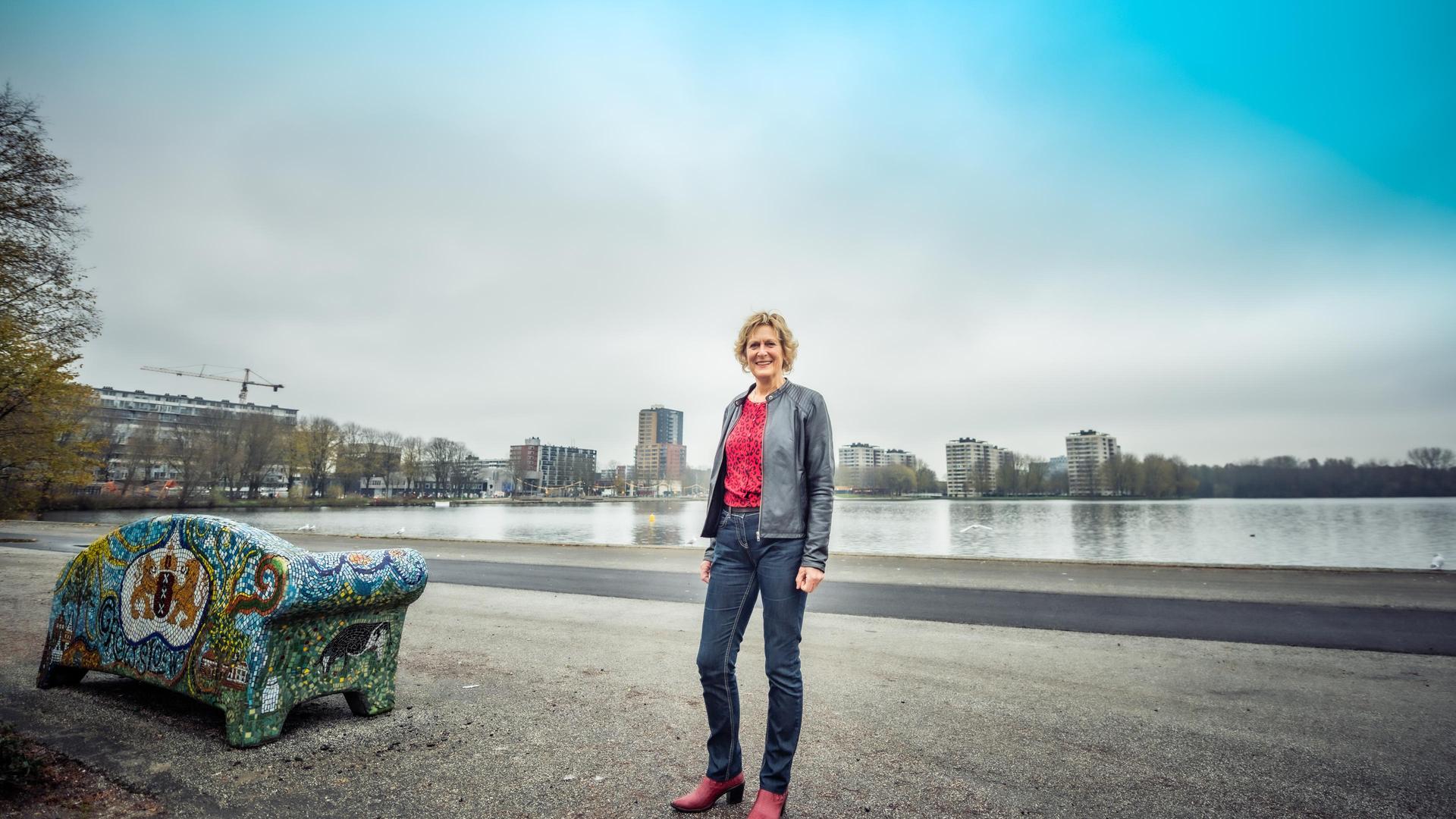
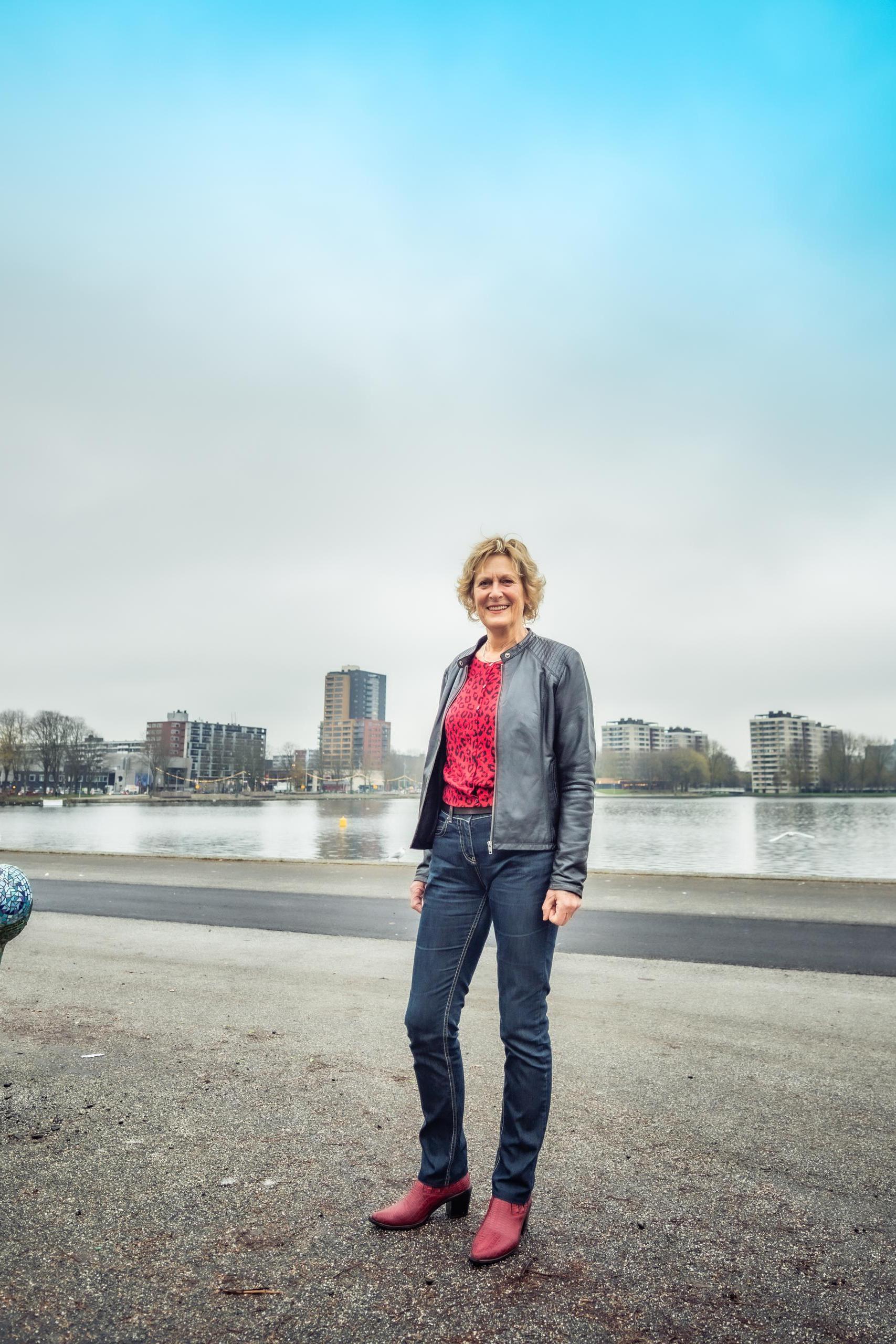
Thea: "Meervaart really enriches me"
A Vision on Nieuw-West
Under the heading 'The Dream' we will be in conversation with neighborhood residents and/or visitors to Meervaart over the coming period. What does Meervaart and the surrounding area mean to you? What makes Nieuw-West so unique? What is your dream for Meervaart and Nieuw-West?
This week we're talking with Thea (70) about her connection with the neighborhood and Meervaart. A familiar face? That could well be! Thea worked at our box office for many years and was the first point of contact within our theater. In this dream, she takes us through the developments over the years and shares her vision for the future.
When I started working at Meervaart, we were still writing reservations on index cards.
You're a former employee and still a loyal visitor to Meervaart. Let's go back in time: how did you end up at Meervaart?
At 21, I moved to Amsterdam from Brabant. First I lived near the Sloterplas, and now I've been living in the old village of Sloten for 40 years. I'd always been interested in theater, so in 1984 I registered as a volunteer at Meervaart. I was assigned to the bar and box office. Two years later, a 28-hour position opened up at the box office, I applied for it and never left, until I retired in 2010.
So you've seen a lot in those years! Will you take us on a journey through time?
When I started working at Meervaart, we were still writing reservations on index cards. The row and seat numbers were marked on the cards – we called it bongo. You can imagine things sometimes went wrong. In the early '90s, there was also a period when we sold tickets for other theaters. We were one of the first theaters with a ticketing system, so we sold tickets for Carré, the National Opera & Ballet, the City Theater (now ITA), and the Concertgebouw among others.
We were also very popular with these theaters because we had a very convenient location – people could easily get here. When a popular opera went on sale, we had to make sure we were well-staffed. In the morning, there would already be a long line at our door for tickets to an opera at the National Opera & Ballet. The nice thing was that we as staff could also easily buy tickets for performances at other theaters ourselves. The camaraderie was really good and sociable.
Meervaart also used to have a cinema with 90 seats. For years we participated in the Rotterdam Film Festival, the International Documentary Film Festival, and projects in collaboration with the Dutch Film Academy. Because we got limited audiences, the cinema eventually closed. We did get a lot of feedback from people saying they thought it was a shame, but sometimes I'd never even seen them in the cinema.
In 1997, the old Meervaart closed and we temporarily moved to the Schipperschool for two years. During that time, we mainly organized small projects on location, in schools and churches. Of course, we couldn't do large productions. This period had its own charm – you had to take your cash boxes everywhere. I was also involved in the construction of the new, current Meervaart. I'd go along with the builders of the stands and visit different theaters to see how their box offices were arranged, so we could learn from each other and avoid mistakes like poor layouts. It was a really fun period!
What's the most special moment that stands out from your time working at Meervaart? And how was the camaraderie with your colleagues?
From day one, the camaraderie with my colleagues was really pleasant. It's unique how everyone got along and continued to do so – everyone always had each other's backs. This also meant we could carry out large projects; no one was too good to work longer hours and there was always great food. Sociability and hard work went hand in hand. You can still feel that when you're at Meervaart, and visitors notice it too.
There are several moments that have stuck with me. Especially in my early days, a lot of unique things happened at Meervaart – big international projects like 'A Hundred Years of Jazz' and major exhibitions, including 'La Mode'. The latter had to be opened on a Sunday. The inside of Meervaart was unrecognizable and filled with ponds. That same morning, Bert Liebregs – the manager at the time and later director of Meervaart – came up with the idea that it would be nice to have goldfish swimming in those ponds during the opening. On a Sunday morning, no less. We all got together to arrange for fish. By the end of the afternoon, the exhibition opened and sure enough, there were the fish swimming!
André Rieu also performed at Meervaart in his early days, which I found really special! Especially seeing how much people enjoyed what was happening on stage. And Nelson Mandela's visit was very exciting. The building had to be completely inspected the day before – everything had to be completely safe. I'll never forget that; his visit was really special.
Not entirely work-related, but there's one company outing that has also stayed with me. We went to The Hague for a performance, and as staff, we had to report one by one to different houses. You'd be taken upstairs to a large room. I had to sit on one side and someone stood at the far end of the room. They'd start a conversation with you and you just couldn't make heads or tails of it. You'd sit there thinking "where are my colleagues?" Then you were supposed to go back outside, and when you did, you thought "what now?" Then someone walked up to you on a bike and spoke to you, and trusting in good faith that this person was part of the concept, you'd cross the entire Binnenhof with them, chatting. Then someone else would pick you up and you'd go into a hosiery shop together. After that, a driver would pick you up in a car – that driver was Jon van Eerd. The whole thing was so perfectly timed. It ended at a big terrace where everyone naturally had big stories to tell. It was really great!
How is it to come to Meervaart as a visitor now, and what kinds of performances do you like to see?
I have broad taste. I visit large-scale productions, but also dance and smaller-scale performances. I'm particularly drawn to productions in the Blauwe Zaal. I thought 'Jihad van Liefde' was a really beautiful production, but I also love special productions like Orkater and Jakop Ahlbom.
When I came to Meervaart as a visitor for the first time after retiring, it felt strange but also familiar. I immediately walked past reception to my old workplace and had to restrain myself from picking up the phone when it rang. I still feel so at home there. Meervaart really enriches my life. I find it especially difficult during these times, now that everything is closed. I sometimes watch performances online, but it can't compare to the experience of an evening at the theater.
Meervaart should become the vibrant heart of Nieuw-West, more than it already is
The nice thing about Meervaart is that it's a theater that brings energy every day of the week. That's hardly the case at any other theater. Especially when I worked there, it was always a surprise what would happen next. One day our own productions, the next day a conference with people from healthcare, education, or politics. No two days were the same.
What's your dream for Nieuw-West, and what role can Meervaart play in it?
Meervaart should become the vibrant heart of Nieuw-West, more than it already is. I think that's the most important thing – that at any time of day, you feel like "that's where things are happening". Nowadays, with the Talent Development and Education department, there's already more going on than before. That's a nice development, but in my opinion, there could be more visibility for all the activities Meervaart does.
Besides that, I'd love to see more exhibitions at Meervaart, rotating wall displays for example, and for young people to play a role in these.
Want to read more stories about unique connections with our neighborhood? Follow the entire "The Dream" series.