Een versterkende werking van openbare ruimte, natuur en cultuur staat centraal.
M-Talk
Misunderstandings and Sources of Inspiration Nieuwe Meervaart
On the way to a building where public space, nature and culture complement and enrich each other.
The final site selection for the expansion area of the Nieuwe Meervaart, approved by the municipal executive board in February 2024, is drawing attention. In this M-Talk we give an impression of how Meervaart views the design possibilities and integration of a new building at the corner of Lelylaan / Meer en Vaart.
In this M-Talk, we address and refute five common misconceptions from Meervaart's perspective. We also share some sources of inspiration that stimulate our vision and imagination for a new building. These example projects demonstrate the versatility and potential of what is possible in the context of the Nieuwe Meervaart. They form our vision of an appropriate integration of a new cultural building into its surroundings, with the reinforcing effect of public space, nature, and culture at the center.
5 misconceptions about the Nieuwe Meervaart refuted
1. No concrete block in the lake
In October 2020, resistance to the new construction was further fueled by a drawing of four massive stacked blocks in the lake. No one can be in favor of that. Not Meervaart either. Even though we once hosted the 'Berlin' festival; East German architecture is foreign to us. Moreover, the interpretation of the dimensions and scale representation is incorrect. The Nieuwe Meervaart will be, in our vision, a building with a volume and construction in organic forms. A building that fits into the spatial image of the area.
2. No ugly back side
Nothing is as ugly and annoying as the back of a theater. We hear suggestions that people think all investment will go into a beautiful facade facing the Sloterplas, while the theater turns its back on Centrum Nieuw-West. A back side as a large, thick blind wall with a permanent parking space for trucks and vans. Someone cited the Rijswijkse Schouwburg as an example, which has its beautiful entrance facing the park while neglecting its back side.
Het nieuwe gebouw mag géén achterkant hebben. Alle zijden doen mee en zijn uitnodigend voor de omgeving.
And that is precisely what we at Meervaart do not want. Trucks and vans loading and unloading inside and remaining parked there. The new building must not have a back side. All sides participate and are inviting to the surroundings; there will be multiple entrances. The New Meervaart will be a building that engages on all sides with a presence in 360 degrees. In our vision, that is a beautiful challenge for the future architect.
3. No interruption of the Sloterplas loop
Sloterpark is renowned among residents for its loop around the Sloterplas. Cabaret performer Dolf Jansen regularly ran there before his performances at Meervaart. When the council decision was announced, concerns quickly emerged in app groups and on social media: "Now the loop will already be inconveniently interrupted by the Sloterparkbad, will a theater be added there as another barrier?" But nothing could be further from the truth. Rather, the building will become a (sporting) part of the loop around the lake. If not along the building, then perhaps through it or over it.
4. No loss of green space
Of course, building next to a park and partly in the water immediately raises concerns about further loss of precious green space. But look honestly at how green the south shore is. It consists of patches of low-quality green with shrubs and ordinary trees, and there is a wide paved quay with a polluted waterfront. We believe that a new building can actually add green space. There are inspiring examples from all over the world. Think of the appeal of the SportPlaza Swimming Pool in Amsterdam-West and the Acros Fukuoka building in Japan. Acros Fukuoka is a hub for the exchange of knowledge and culture. It was built on the site where the last bit of public green space in the city of Fukuoka used to be. How wonderful would it be if we could translate elements of this into a New Meervaart that provides more green space at the lake.
An open, accessible building that fits into the landscape and urban environment.
5. Don't take away public space
There is fear and anger about the fact that building on the riverbank takes away precious public space from the surrounding area. As Meervaart, we believe we can actually add public space. In the current situation on the east bank, the function of public space disappears after dusk due to an increasing sense of insecurity. Residents avoid the riverbank in the evenings. A New Meervaart will upgrade the area. We create vibrancy and activity. Part of the building and its outdoor space will always be open to passersby, regardless of whether you participate in a Meervaart activity or not. Additionally, in our vision it will be an organic building that flows with its surroundings. That means you can also go up on the building. Our roof becomes a new public space. A place where you can relax, where you can exercise, where children can play or where you can enjoy the view with friends over a drink.
5 sources of inspiration for the New Meervaart
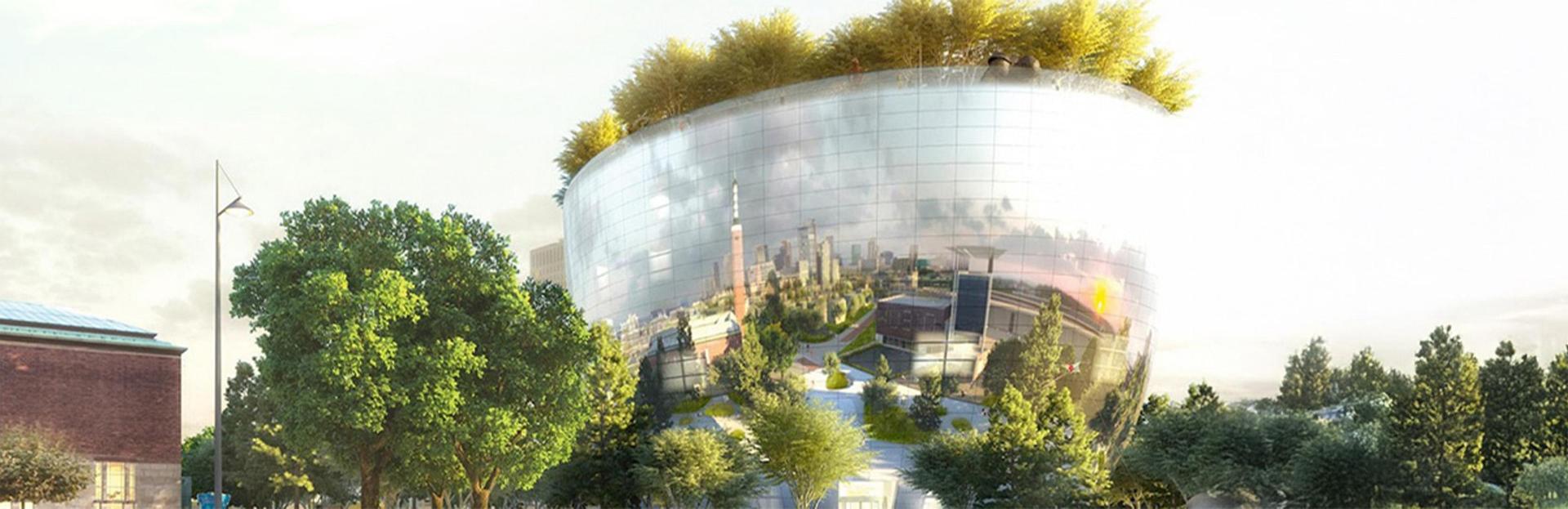
1. A forest on the roof of the Boijmans Van Beuningen Depot
In 2021, Museum Boijmans opened its depot. It is a building in the heart of a park. Through its organic, oval spherical shape and reflective walls, the building integrates into its surroundings. Nature is not only mirrored in the building; it also determines the design of the roof. On this floor, there is a planted area with trees and a Grand Café with a terrace where visitors can enjoy views over the city.
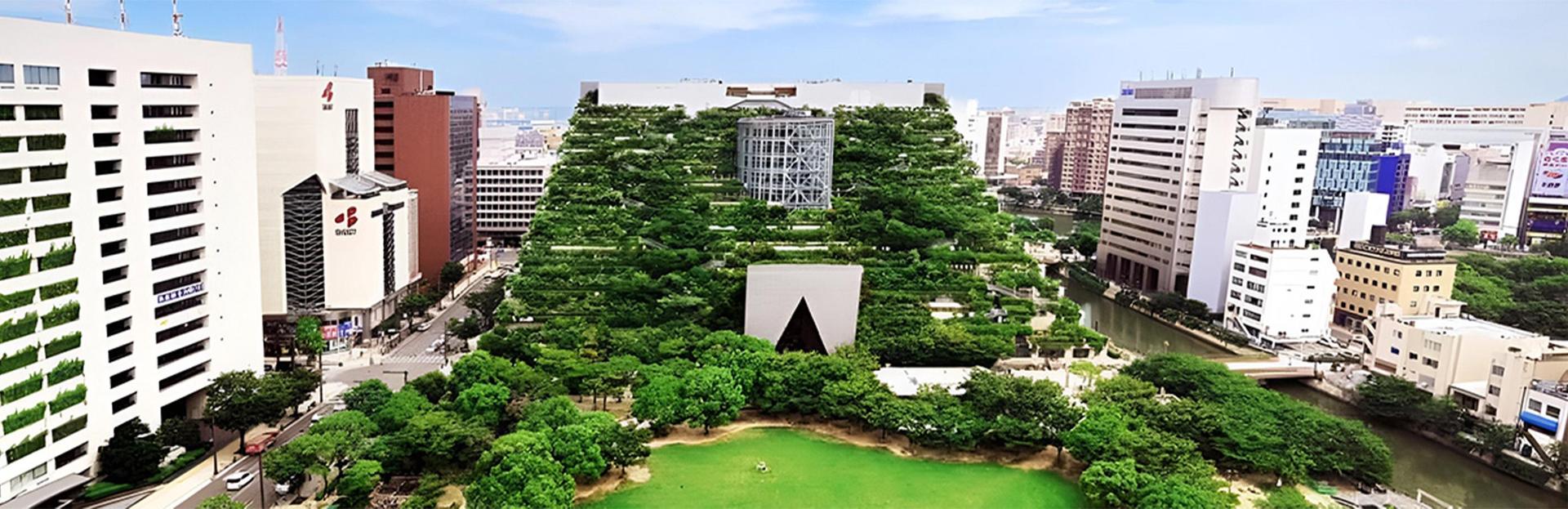
2. Acros Fukuoka with its façade that changes with the seasons
This terraced building was designed as an extension of the park in front of it. Like a green hill, it marks the center of the city. Buildings like Acros Fukuoka are inspiring not only because they are a new urban landmark, but also because they form a rich urban ecosystem. Due to its large scale and diversity of planting, the building's appearance changes with the seasons.
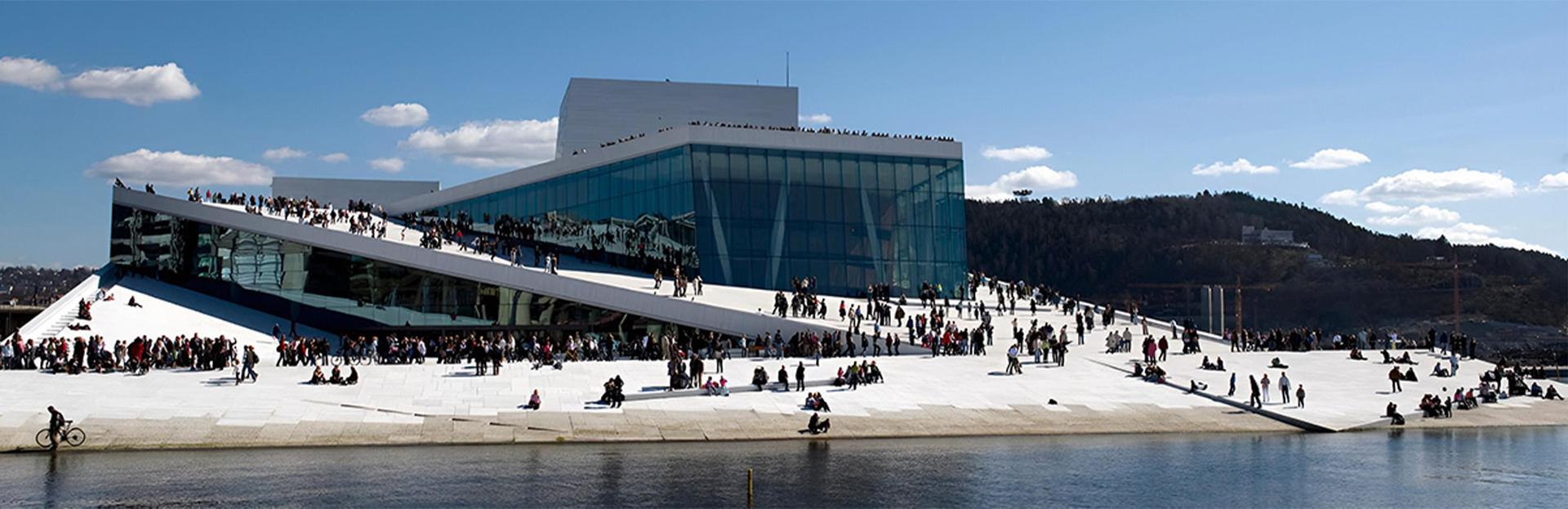
3. Climb the roof of the Oslo Opera House
This is a fine example of how a waterfront can organically flow into a building. Of course, the scale is incomparable to our ambitions for the Nieuwe Meervaart. Moreover, we aspire to green over stone. But it is inspiring to consider how you can create a connection between boulevard and roof. A building as a public gathering place with a walking route and a tribune for performances and views over the water and the stars. A location where there is vitality, in, on and around the building.
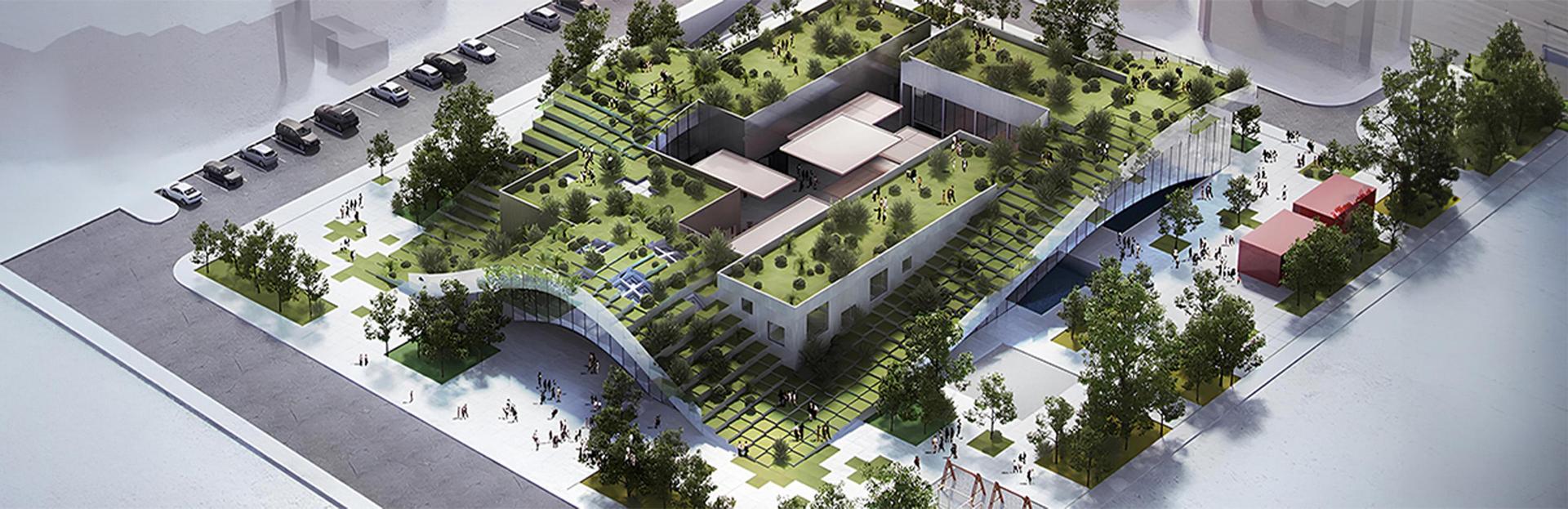
4. The cultural center of Bornova, without front or back
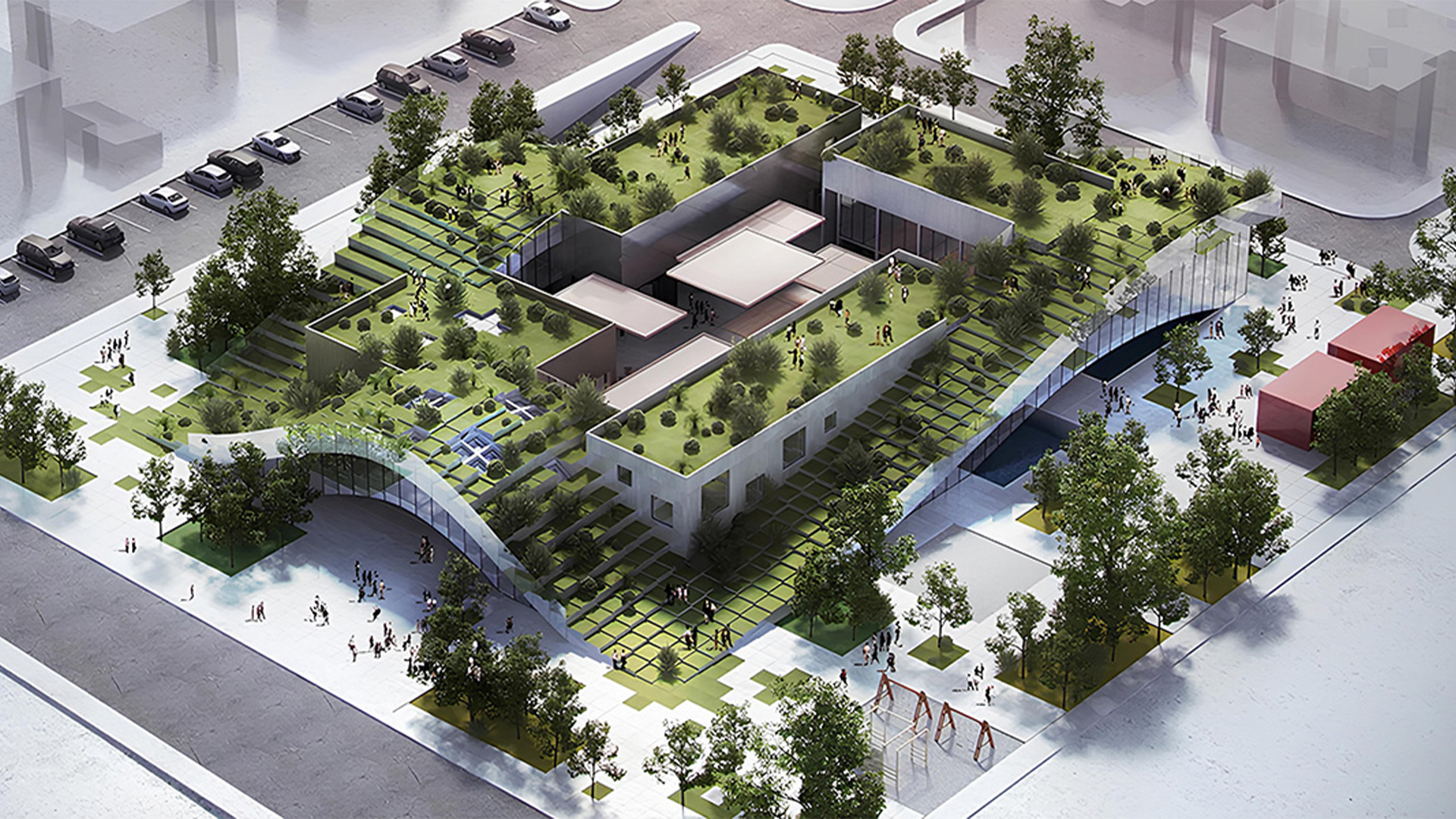
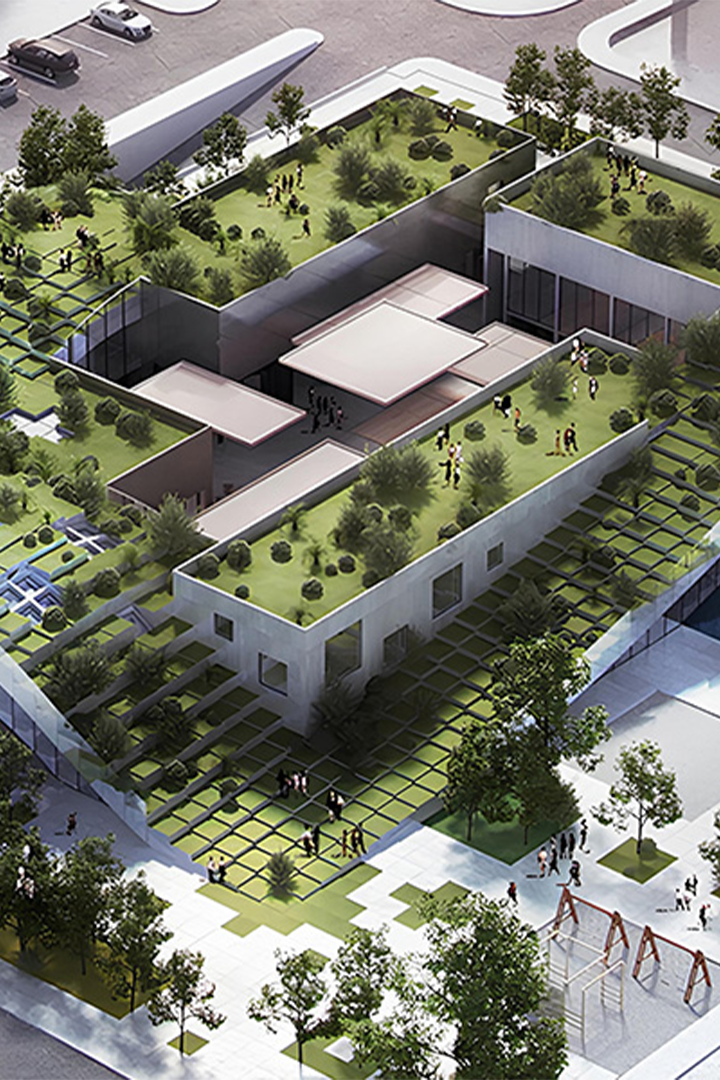
This design for a cultural center for children in the Turkish city of Bornova incorporates three inspiring elements. It demonstrates that you can create a building with a natural slope that would fit seamlessly with the Sloterplas. Here too, the distinction between street level and roof is fluid. But above all, it shows the possibility of a multi-faceted building. A structure that has no prominent front or back and presents an inviting appearance from all sides. The fact that the architect manages to unite these qualities in a single building demonstrates the potential for the Nieuwe Meervaart as an open, accessible building that fits into the landscape and metropolitan surroundings.
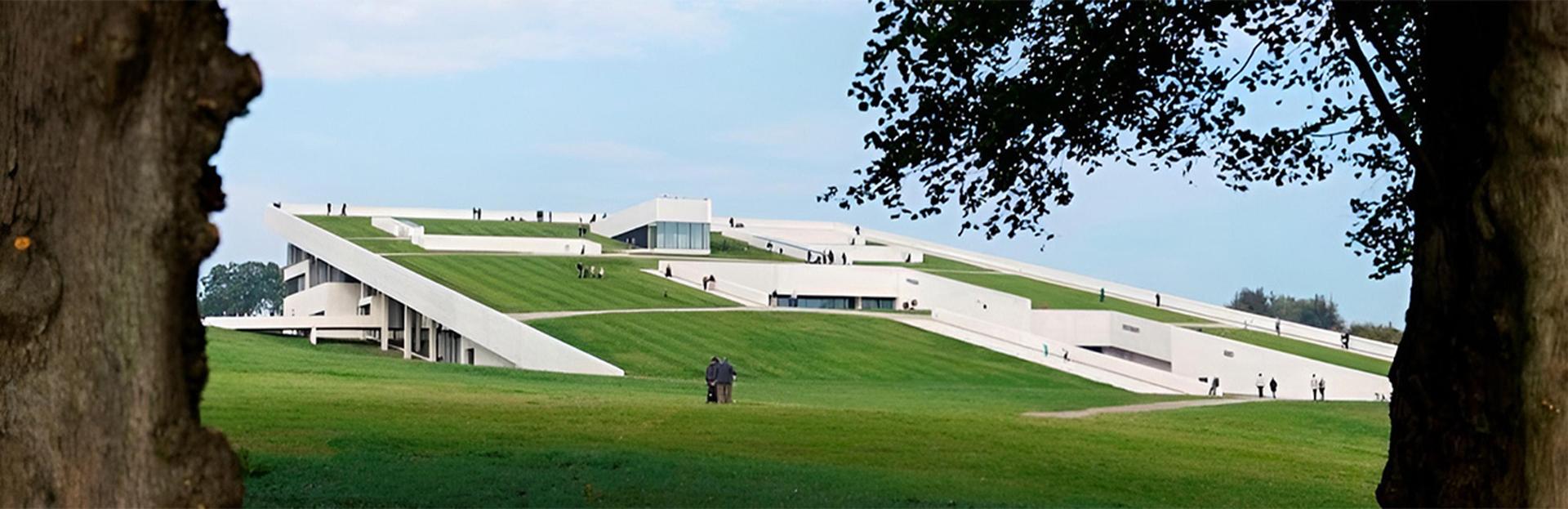
5. The combination of culture, architecture and nature at the Moesgaard Museum
The history museum in Højbjerg (Denmark) literally rises from the green landscape. Its architecture connects culture and nature. The sloping roof of the museum offers a wonderful view over the surroundings, without being an obstacle itself. It is another example of how good design contributes to the value of public space.
This MTalk is an adaptation of two articles from the workbook 'The New Meervaart' (February 2021). This workbook contains the thoughts and principles that guide us in developing the new building. It is a collection of our story so far and our vision for the future.
Enjoy, be surprised, read critically, dream along and use it to further refine the familiar ambitions and plans.
A digital version of the entire workbook is available via [email protected].